
1st International Conference 2026
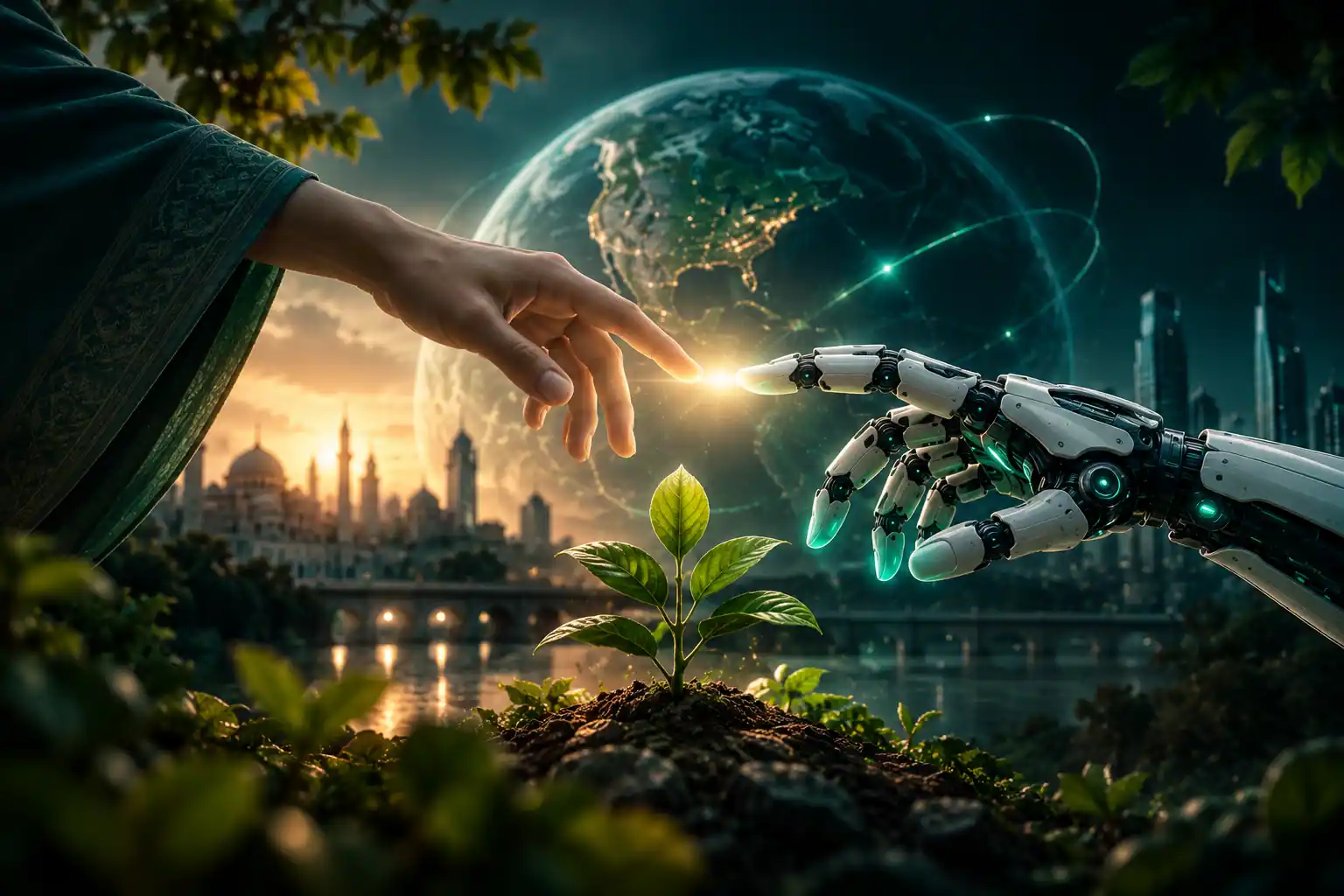
Reclaiming Humanity in the Era of Artificial Intelligence
Nov 14-15, 2026
Alhamd Islamic University
AI won’t replace humans, but those who use AI will replace those who don’t.
Conference Introduction
Reclaiming Humanity in the Era of Artificial Intelligence
The rapid emergence of Artificial Intelligence (AI) has transformed the intellectual, cultural, and social landscapes of the twenty-first century. From automated writing and translation to algorithmic recommendation systems, generative AI, and machine-assisted research, technologies once imagined primarily within the realm of science fiction have become deeply embedded in everyday human life. While AI offers unprecedented opportunities for knowledge production, communication, creativity, and innovation, its growing influence also raises profound questions about what it means to be human. In an age increasingly shaped by algorithms, automation, and machine-generated language, the need to reconsider human agency, imagination, empathy, ethics, and creativity has become more urgent than ever.
Literary studies occupy a particularly significant position within this conversation because literature has historically been one of humanity's most powerful means of exploring the complexities of human experience. Literature gives expression to emotions, memories, identities, desires, conflicts, ethical dilemmas, and forms of existence that cannot always be reduced to data or computational processes. At the same time, the emergence of generative AI challenges conventional understandings of authorship, originality, creativity, interpretation, and the relationship between humans and machines. If machines can now produce poems, stories, essays, translations, and literary analyses, questions inevitably arise concerning the distinctive qualities of human creativity and the cultural value of literary expression.
The theme “Reclaiming Humanity in the Era of Artificial Intelligence” therefore invites scholars, researchers, writers, educators, and students to critically examine the changing relationship between humans, technology, and the literary imagination. Rather than approaching AI simply as either a threat or a technological achievement, the conference seeks to create a nuanced interdisciplinary dialogue about its implications for literature and the humanities. It asks how literary studies can contribute to a deeper understanding of technological change and, conversely, how AI compels us to rethink established concepts of the human.
At the heart of this discussion is the question of what should be preserved, reconsidered, or reclaimed in an increasingly automated world. Can literature help us recover empathy in an era of algorithmic interaction? How might poetry, fiction, drama, and criticism respond to questions of artificial consciousness, technological alienation, surveillance, digital identity, and human–machine relationships? What happens to the concepts of authorship and originality when texts can be generated collaboratively by humans and machines? How should literary education respond to generative AI, and what forms of critical thinking become essential when machines can imitate human language with remarkable sophistication?
The conference also recognizes that “reclaiming humanity” does not necessarily mean rejecting technological progress. Rather, it calls for a critical and ethical engagement with technology that places human dignity, imagination, responsibility, diversity, and empathy at the center of technological development. Literary studies, with their sustained attention to language, narrative, interpretation, and human experience, are uniquely positioned to contribute to this endeavor. Literature can remind us that human beings are not merely producers or consumers of information but meaning-making subjects shaped by memory, emotion, relationships, culture, history, and ethical choices.
Through interdisciplinary perspectives from literary studies, cultural studies, digital humanities, philosophy, media studies, linguistics, education, and related fields, this conference aims to explore both the possibilities and the challenges presented by AI. It seeks to encourage critical reflection on how technology is reshaping literary production and reception while asking a larger question: how can we ensure that technological advancement strengthens rather than diminishes the qualities that make human life meaningful?
“Reclaiming Humanity in the Era of Artificial Intelligence” thus provides a platform for rethinking the role of literature and the humanities at a moment of profound technological transformation. By bringing humanistic inquiry into conversation with artificial intelligence, the conference aims not merely to understand the future of literature, but to consider what literature can teach us about the future of humanity itself.
Dialogue
Impact
People
Cultures
Better
Tomorrows
Conference Themes
The organizers of the conference welcome abstracts of papers and presentations exploring, but not limited to, any of the following areas:
Culture
Religion
Anthropology
Psychology
World Literatures
Digital Humanities
Posthumanism
Dystopian Fiction
Linguistics
Cultural Studies
Philosophy
Media Studies
Education
Conference Objectives
Humanity at the center of technological change.
The conference brings literary and humanistic inquiry into dialogue with artificial intelligence to examine what should be preserved, reconsidered, and reclaimed in an increasingly automated world.
Human Experience + AI
Critically examine the changing relationship between human experience, artificial intelligence, and the literary imagination.
Authorship + Creativity
Explore how generative AI is reshaping authorship, originality, creativity, interpretation, translation, and literary production.
Human Values
Investigate how literature and the humanities can preserve empathy, dignity, imagination, agency, and ethical responsibility.
Literary Practice
Examine the impact of AI on literary research, education, criticism, reading practices, and the production and reception of texts.
Interdisciplinary Dialogue
Connect literary studies with cultural studies, digital humanities, philosophy, media studies, linguistics, and education.
Digital Identity
Address artificial consciousness, technological alienation, surveillance, digital identity, and human–machine relationships.
Ethical Technology
Promote critical engagement with technology that places human values, diversity, responsibility, and meaning at the center of innovation.
Education + Critical Thinking
Reconsider literary education and critical thinking when machines can generate and interpret human language with increasing sophistication.
The Future of Humanity
Explore how literature and humanistic inquiry can help ensure technological advancement strengthens meaningful human life.